Loan Payment Calculator: The Complete Guide to Calculating Any Loan Payment in 2026
July 28, 2026
Search for "loan calculator," "payment calculator," or "mortgage calculator" and you'll find dozens of tools that all promise to tell you your monthly payment. But most give you a number without explaining how they got there - or which calculator actually fits your situation. This guide breaks down exactly how a loan payment calculator works, walks through the real formula lenders use, and shows you which calculator to reach for depending on the loan you're planning.
What Is a Loan Payment Calculator?
A loan payment calculator is a tool that estimates your fixed periodic payment on any installment loan - a mortgage, personal loan, auto loan, or student loan - based on three core inputs: the loan amount (principal), the interest rate, and the loan term. Whether you're using a mortgage calculator, an mtg calculator (a common shorthand search term for the same tool), or a general-purpose loan calculator, they all run on the same underlying math.
The reason these calculators matter is simple: your payment isn't just principal divided by months. Interest is charged on your remaining balance every period, which means the true monthly figure requires a specific formula - not a rough estimate.
The Formula Behind Every Payment Calculator
Every loan payment calculator, whether it's labeled a mortgage payment calculator, an amortization calculator, or simply a payment calculator, uses this standard amortization formula:
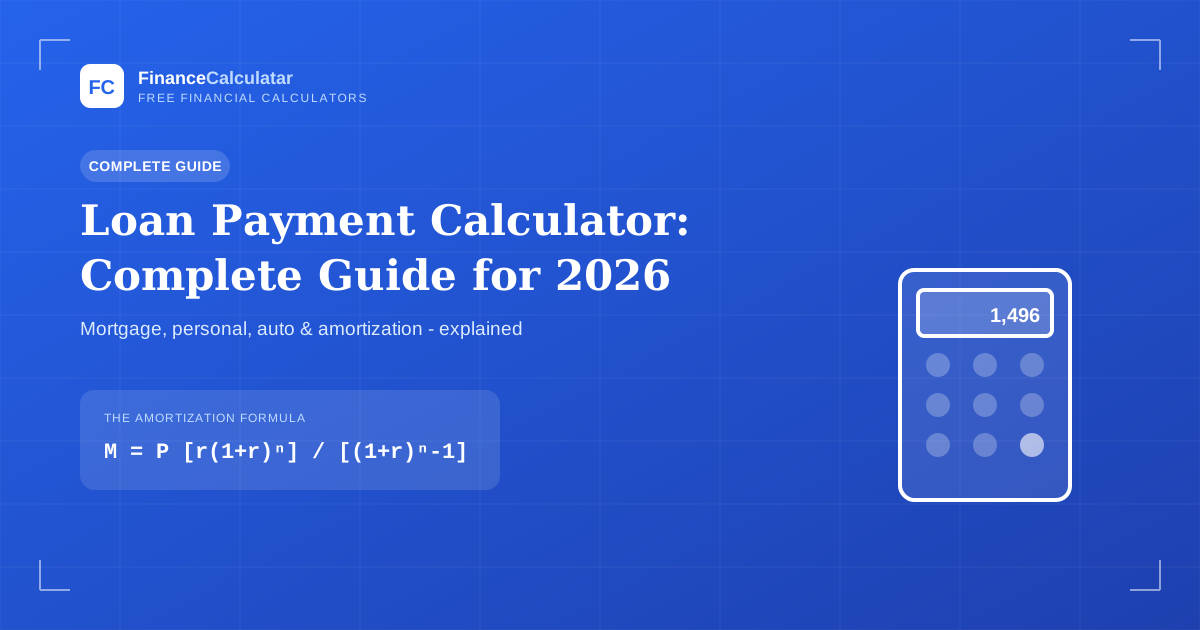
M = P × [r(1+r)^n] / [(1+r)^n - 1]
Where:
- M = your monthly payment
- P = principal (the loan amount)
- r = monthly interest rate (annual rate divided by 12)
- n = total number of payments (loan term in months)
You don't need to run this formula by hand - that's exactly what a calculator is for - but understanding it explains why even a small rate difference changes your payment more than people expect, and why longer terms lower your payment but increase total interest paid.
Mortgage Calculator vs Mtg Calculator: Same Tool, Different Search
If you've searched "mtg calculator," you've landed on the same type of tool as a full mortgage calculator - "mtg" is simply a common abbreviation for mortgage used in banking and real estate. Both terms point to a calculator that estimates your monthly home loan payment, factoring in principal, interest, property tax, and homeowners insurance (often called PITI).
Our free Mortgage Calculator handles this exact calculation - enter your home price, down payment, interest rate, and loan term, and you'll see your full monthly payment breakdown along with a complete amortization schedule.
| Home Price | Down Payment | Rate | Term | Monthly Payment* |
|---|---|---|---|---|
| $250,000 | 10% | 7% | 30 yrs | ≈ $1,496 |
| $350,000 | 20% | 7% | 30 yrs | ≈ $1,863 |
| $450,000 | 20% | 6.5% | 15 yrs | ≈ $3,138 |
*Principal and interest only, excluding taxes and insurance. Use the calculator above for your exact figures including PITI.
Mortgage Payment Calculator: What's Actually Included
A common source of confusion is why a "mortgage payment calculator" quote differs from a basic loan calculator quote on the same numbers. The difference is what's included:
- Basic loan calculator: Principal and interest only.
- Full mortgage payment calculator: Principal, interest, property tax, homeowners insurance, and PMI if your down payment is under 20%.
This is why two "mortgage calculators" can show different numbers for the same loan - always check whether taxes and insurance are included before comparing tools or comparing your estimate to a lender's quote.
Personal Loan Calculator: A Different Set of Variables
A personal loan calculator uses the same core formula but typically factors in a few extra variables that mortgages don't have: origination fees and shorter, fixed terms (usually 1-7 years instead of 15-30). Since personal loans are unsecured, rates run considerably higher - typically 7% to 36% depending on credit score - so the calculator becomes even more important for understanding your real cost of borrowing.
Try our free Personal Loan Calculator to see your monthly payment, total interest, and effective APR (which accounts for any origination fee) side by side.
| Loan Amount | Rate | Term | Monthly Payment | Total Interest |
|---|---|---|---|---|
| $10,000 | 12% | 3 yrs | ≈ $332 | ≈ $1,969 |
| $20,000 | 15% | 5 yrs | ≈ $476 | ≈ $8,552 |
| $35,000 | 9% | 5 yrs | ≈ $726 | ≈ $8,536 |
Amortization Calculator: Seeing the Full Payment Schedule
Where a basic loan calculator gives you one number, an amortization calculator shows you every payment across the life of the loan - broken into principal and interest for each period. This is the tool to use when you want to understand how your balance actually decreases over time, or when you're deciding whether extra payments are worth making.
Here's what's easy to miss: in the early years of any loan, the majority of each payment goes toward interest, not principal. An amortization calculator makes this visible instead of hidden inside a single monthly number.
Use our free Amortization Calculator to generate a full year-by-year or month-by-month schedule for any loan amount, rate, and term - including a custom start date so you can see your exact projected payoff month.
Loan Payment Calculator for International Formats: EMI
If you've searched using terms common outside the US - like "EMI" (Equated Monthly Installment) - you're looking for the exact same calculation under a different name. EMI is the standard term used across much of Asia and the Middle East for what Americans call a "monthly payment." The formula, and the calculator, work identically.
Our free EMI Calculator lets you use sliders for loan amount and tenure, includes processing fee calculations, and shows a full principal-vs-interest breakdown - useful whether you're calculating in USD or comparing loan structures used internationally.
How Loan Term Affects Your Payment Calculator Results
One of the most useful things any payment calculator reveals is the tradeoff between loan term length and total cost. Here's the same $20,000 loan at 9% across different terms:
| Term | Monthly Payment | Total Interest Paid |
|---|---|---|
| 2 years | ≈ $913 | ≈ $1,912 |
| 4 years | ≈ $498 | ≈ $3,904 |
| 6 years | ≈ $360 | ≈ $5,920 |
Notice that stretching the same loan from 2 to 6 years roughly halves the monthly payment - but triples the total interest paid. Every payment calculator on this site lets you test multiple terms instantly so you can find the balance that fits your budget without overpaying in interest.
Common Mistakes People Make With Payment Calculators
- Forgetting taxes and insurance on mortgages: A "mortgage calculator" showing only principal and interest can understate your real payment by hundreds of dollars a month.
- Ignoring origination fees on personal loans: A 3-5% fee changes your effective interest rate meaningfully - always check the APR, not just the stated rate.
- Comparing calculators with different assumptions: Two tools can show different numbers for the same inputs simply because one includes PMI or fees and the other doesn't.
- Using today's rate for a future purchase: Rates change. Always re-run your numbers close to when you'll actually apply for the loan.
Frequently Asked Questions
What is the difference between a loan calculator and an amortization calculator?
A loan calculator typically shows your single monthly payment amount. An amortization calculator goes further, breaking down every individual payment across the full loan term into its principal and interest components, so you can see exactly how your balance declines over time.
Why do mortgage calculator and mtg calculator show the same results?
They're the same tool - "mtg" is simply an abbreviation for "mortgage" commonly used in the finance and real estate industry. Any calculator labeled either way should use the same PITI-based formula.
Is a payment calculator accurate enough to use for budgeting?
Yes, for planning purposes. A payment calculator using the standard amortization formula gives you a highly accurate estimate, generally within a few dollars of what a lender will quote - assuming you enter the correct rate, term, and fees.
Can I use one calculator for multiple loan types?
The core math is identical, but the inputs differ. A mortgage needs taxes and insurance factored in; a personal loan needs origination fees; an auto loan needs sales tax and trade-in value. Using a calculator built for your specific loan type gives you a more accurate result than a generic one.
Disclaimer: This article provides general information only and does not constitute financial or lending advice. Figures shown are estimates for illustration. Consult a licensed lender or financial advisor for guidance specific to your situation.
Related Articles
Loan Repayment Calculator: How to Plan and Estimate Your Payments Before You Borrow
Jul 29, 2026
Personal Loan Interest Calculator: How to Estimate Your Monthly Payment and Total Cost
Jul 29, 2026
Mortgage Pre-Approval Calculator Guide: Comparing Rates, Cash-Out Refinance, and Affordability
Jul 29, 2026