Mortgage Pre-Approval Calculator Guide: Comparing Rates, Cash-Out Refinance, and Affordability
July 29, 2026
Getting pre-approved for a mortgage is the step that turns house hunting from guesswork into a real plan - but most buyers walk into the process blind, without knowing what number a lender will actually approve or how their situation compares across loan types. This guide walks through how a mortgage pre-approval calculator works, how to compare mortgage offers properly, and where cash-out refinancing fits in if you already own a home.
What Is a Mortgage Pre-Approval Calculator?
A mortgage pre-approval calculator estimates the loan amount a lender is likely to approve, based on your income, existing debts, credit profile, and down payment - before you submit a formal application. It's not the same as actual pre-approval, which requires a lender to verify your documents and pull your credit, but it gives you a realistic target so you're not wasting time house hunting outside your actual budget, or under-shooting what you could actually qualify for.
The calculation behind it uses the same debt-to-income framework lenders use in real underwriting - primarily the 28/36 rule, which caps your housing payment at 28% of gross income and your total debt at 36%.
Mortgage Affordability Calculator vs Pre-Approval Calculator
These two terms get used almost interchangeably, and for good reason - a mortgage affordability calculator and a pre-approval estimator both answer the same underlying question: how much can I responsibly borrow? The small difference is emphasis:
- Affordability calculator: Focuses on what fits your budget and lifestyle, sometimes suggesting a more conservative number than a lender's maximum.
- Pre-approval calculator: Focuses on what a lender would likely approve based purely on DTI limits, which can be higher than what feels comfortable.
Both are useful, and running your numbers through both perspectives gives you a realistic range rather than a single number that might be too aggressive or too conservative.
Try our free Home Affordability Calculator to see your maximum home price at 28%, 36%, and 43% DTI levels side by side - giving you both the lender's ceiling and a more comfortable target.
Real Example: Pre-Approval Range by Income
Here's how the pre-approval range typically looks at different income levels, assuming a 7% rate, 30-year term, 10% down payment, and $400/month in existing debt:
| Annual Income | Conservative (28% DTI) | Lender Max (36-43% DTI) |
|---|---|---|
| $65,000 | ≈ $195,000 | ≈ $265,000 |
| $90,000 | ≈ $275,000 | ≈ $375,000 |
| $120,000 | ≈ $370,000 | ≈ $505,000 |
*Figures are illustrative estimates. Your actual pre-approval depends on your exact credit score, debts, and lender guidelines.
How to Actually Compare Mortgage Offers
Once you have a pre-approval range, the next challenge is mortgage comparison - evaluating offers from multiple lenders that rarely present numbers the same way. Here's what to line up side by side for a fair comparison:
- Interest rate vs APR: The APR includes lender fees and gives a more accurate picture of total cost than the headline rate alone.
- Loan term: Compare offers at the same term - a 15-year and 30-year quote from different lenders aren't directly comparable.
- Points and origination fees: Some lenders quote a lower rate but charge more in upfront points - calculate the true cost over your expected time in the home.
- Rate lock period: Longer locks sometimes carry a slightly higher rate but protect you if closing takes longer than expected.
Run each lender's rate and term through our free Mortgage Calculator to see the real monthly payment and total interest for every offer on equal footing, rather than comparing headline numbers that hide the full cost.
Rate Comparison: Why 0.5% Matters More Than It Sounds
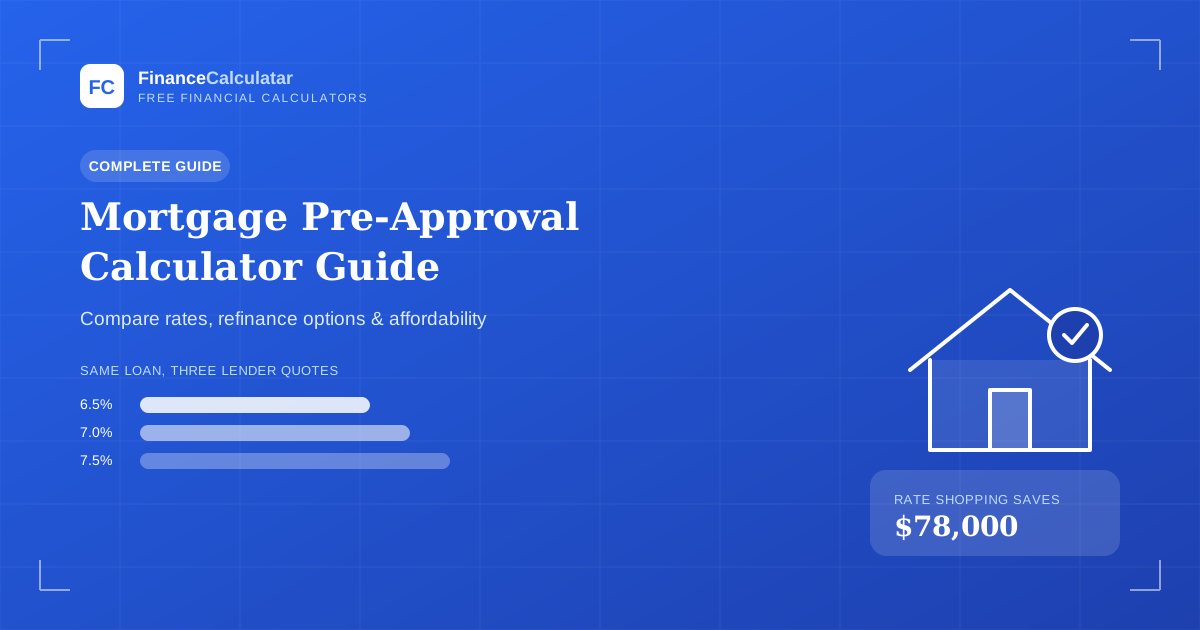
A small rate difference compounds significantly over a 30-year term. Here's the same $320,000 loan at three rates lenders might quote:
| Rate | Monthly Payment (P&I) | Total Interest (30 yrs) |
|---|---|---|
| 6.5% | ≈ $2,022 | ≈ $407,900 |
| 7.0% | ≈ $2,129 | ≈ $446,400 |
| 7.5% | ≈ $2,238 | ≈ $485,700 |
The difference between the lowest and highest quote here is nearly $78,000 in total interest over the life of the loan - which is exactly why comparing at least three lender quotes before committing is worth the extra time.
Cash-Out Refinance Calculator: A Different Kind of Comparison
If you already own a home, a cash-out refinance calculator answers a different question than a pre-approval calculator for a new purchase - it estimates how much equity you can convert to cash by replacing your current mortgage with a larger one, and what your new payment looks like as a result.
This is commonly used to fund renovations, consolidate higher-interest debt, or cover major expenses, but it comes with a tradeoff: you're extending your loan balance and, in many cases, resetting your amortization clock.
Our free Refinance Calculator includes a cash-out option - enter your current balance, new loan amount including the cash you want to pull out, and your new rate to see your updated monthly payment, break-even point, and total interest impact compared to your current loan.
When Cash-Out Refinancing Makes Sense
- You need a large, one-time amount: Renovations, debt consolidation, or major expenses where a lump sum makes more sense than a separate loan.
- Current rates are close to or below your existing rate: If refinancing significantly raises your rate, a home equity loan or HELOC may cost less overall.
- You plan to stay in the home long enough to reach your break-even point: Closing costs need time to be recovered through your new terms.
Putting It All Together: A Simple Pre-Purchase Checklist
- Run your numbers through an affordability calculator to get both a conservative and lender-max range.
- Get pre-approved with at least two or three lenders to compare real rate offers.
- Use a mortgage calculator to compare each offer's true monthly payment and total interest at the same term.
- If refinancing an existing home instead of buying, model your cash-out scenario before applying so you know your break-even point in advance.
- Re-run all your numbers close to your actual purchase or refinance date, since rates shift regularly.
Frequently Asked Questions
How accurate is a mortgage pre-approval calculator compared to real pre-approval?
A calculator gives a close estimate based on standard DTI guidelines, but real pre-approval involves a hard credit pull and document verification, which can shift your number up or down based on details a calculator can't see, like income type or existing account history.
What's the difference between pre-qualification and pre-approval?
Pre-qualification is a quick, informal estimate based on self-reported information. Pre-approval involves actual document and credit verification by a lender, and produces a number sellers take seriously in an offer.
Should I compare mortgage rates from more than one lender?
Yes - shopping at least three lenders within a short window (most credit scoring models group inquiries made within 14-45 days as a single inquiry) typically saves borrowers thousands over the life of the loan.
Is a cash-out refinance the same as a home equity loan?
No. A cash-out refinance replaces your entire mortgage with a new, larger one. A home equity loan or HELOC is a separate loan on top of your existing mortgage, leaving your original loan and rate untouched.
Disclaimer: This article provides general information only and does not constitute financial or lending advice. Figures shown are estimates for illustration. Consult a licensed mortgage professional for guidance specific to your situation.