Early Mortgage Repayment Calculator: How Much Could You Save?
July 28, 2026
If you have ever wondered whether it is worth sending extra money toward your mortgage each month, an early mortgage repayment calculator is the fastest way to find out. Instead of guessing, you can see the exact number of months you will shave off your loan and the exact amount of interest you will avoid paying - before you commit a single extra dollar. This guide explains how early repayment works, walks through a real example, and shows you where to run your own numbers for free.
What Is an Early Mortgage Repayment Calculator?
An early mortgage repayment calculator (sometimes called a mortgage payoff calculator) takes your current loan balance, interest rate, and remaining term, then shows what happens if you add extra payments - either a one-time lump sum, a recurring extra monthly amount, or both. Because mortgage interest is calculated on your remaining balance, every extra dollar you pay early reduces the interest charged for every month afterward, which is why even small extra payments can save thousands of dollars over the life of a 15- or 30-year loan.
Why Paying Off Your Mortgage Early Works
A standard mortgage is amortized, meaning your monthly payment is split between interest and principal, with interest front-loaded in the earlier years of the loan. When you make an extra payment, 100% of that extra amount goes directly to your principal balance. A smaller principal means less interest accrues going forward, which shortens your loan term and reduces your total interest cost - often by a surprising margin.
- Extra principal payments compound in your favor over time.
- You build home equity faster, which helps if you refinance or sell.
- You become debt-free sooner, freeing up monthly cash flow for other goals.
- You reduce total lifetime interest - often the single biggest cost of homeownership.
Example: $300,000 Mortgage With Extra Payments
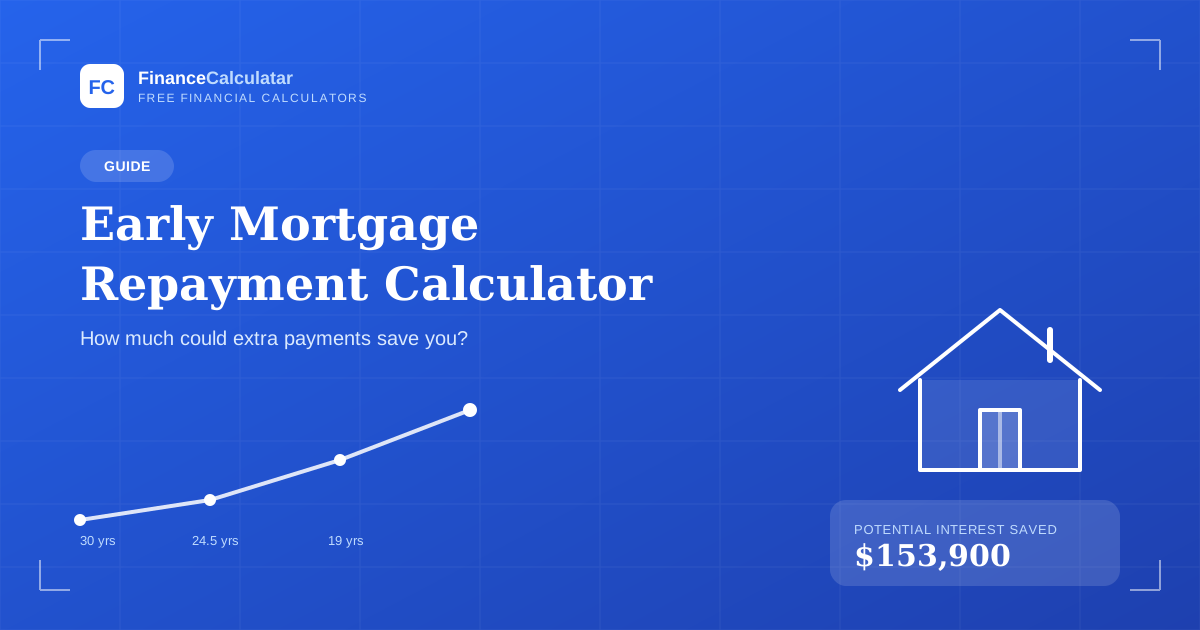
Here is a simplified example to show the impact. Assume a $300,000 mortgage at a 6.5% fixed interest rate on a 30-year term:
| Scenario | Payoff Time | Total Interest Paid |
|---|---|---|
| Minimum payment only | 30 years | ≈ $382,600 |
| + $200/month extra | ≈ 24.5 years | ≈ $299,800 |
| + $500/month extra | ≈ 19 years | ≈ $228,700 |
Figures are rounded estimates for illustration. Your actual savings depend on your rate, balance, and remaining term - use the calculator below to get exact numbers for your loan.
Run Your Own Numbers
Our free Mortgage Payoff Calculator does this math for you instantly. Enter your loan balance, rate, and any extra payment amount to see your new payoff date and total interest saved.
Things to Check Before You Pay Extra
- Prepayment penalties: Some loans charge a fee for paying off early - check your loan documents or ask your lender.
- Extra payment gets applied correctly: Tell your lender the extra amount should go to principal, not to your next month's payment.
- Higher-interest debt first: If you carry credit card or personal loan debt at a higher rate, paying that down usually saves more than extra mortgage payments.
- Emergency fund: Keep 3-6 months of expenses in savings before aggressively prepaying your mortgage.
Frequently Asked Questions
How much extra should I pay on my mortgage each month?
There is no fixed rule - even an extra $100-$200 per month can cut years off a 30-year loan. Use the calculator to test different amounts and find what fits your budget.
Does one extra payment a year make a difference?
Yes. One extra full payment per year (sometimes called a "13th payment") can shorten a 30-year mortgage by 4-6 years depending on your rate and balance.
Is it better to refinance or just pay extra?
Paying extra keeps your original rate and terms with no closing costs. Refinancing makes sense mainly if you can secure a meaningfully lower interest rate.
Will paying off my mortgage early hurt my credit score?
It can cause a small, temporary dip since it closes an active installment account, but the long-term impact of being debt-free is generally positive for your finances.
Disclaimer: This article is for educational purposes only and is not financial advice. Consult a licensed lender or financial advisor before making decisions about your mortgage.
Related Articles
Loan Repayment Calculator: How to Plan and Estimate Your Payments Before You Borrow
Jul 29, 2026
Personal Loan Interest Calculator: How to Estimate Your Monthly Payment and Total Cost
Jul 29, 2026
Mortgage Pre-Approval Calculator Guide: Comparing Rates, Cash-Out Refinance, and Affordability
Jul 29, 2026